Friday, 10 June 2022

Ukraine : Resources to support new pupils and families


Below you will find a range of resources to cover all sorts of needs that may occur as schools begin to welcome in refugees from Ukraine and other countries. All links will be redirects, but should be live and active as of today (I checked them all, honest!)  

If you have any more that could be added, please contact me and I'll endeavour to add as we go. 

I have listed contributors Twitter handles either in the body of the blog or at the end. 

Please share as you wish. 

Government advice and documentation

How many pupils from Ukraine have been given school places in England?

https://educationhub.blog.gov.uk/2022/06/09/how-many-pupils-from-ukraine-have-been-given-school-places-in-england/ 

How do families arriving from Ukraine apply for a school place and childcare? / Як родинам, що приїжджають з України, подавати заяви на отримання місць у школі та допомоги з оплати послуг з догляду за дитиною?

https://educationhub.blog.gov.uk/2022/04/11/how-do-families-arriving-from-ukraine-apply-for-a-school-place-and-childcare-%D1%8F%D0%BA-%D1%80%D0%BE%D0%B4%D0%B8%D0%BD%D0%B0%D0%BC-%D1%89%D0%BE-%D0%BF%D1%80%D0%B8%D1%97%D0%B6%D0%B4%D0%B6%D0%B0/


 Webinars

One-hour webinar (June 14th) on supporting child refugees and students with interrupted formal education may provide some leads. Good luck and hats off to you for your work.

Supporting the linguistic and socio-emotional development of refugee and asylum-seeking children in...

Supporting the linguistic and socio-emotional development of refugee and asylum-seeking children in UK schools – #EAL In this joint Chartered College of Teaching and NALDIC webinar, Professor Jo...

 Welcoming Ukranian Arrivals, Lina Maksymuck provides valuable insight into children’s education in Ukraine. https://youtu.be/YS7imlESFx0


Resources to support discussions with children

 https://phoenixgrouphq.com/tools for general overview of webite and more specifically, here... 

phoenixgrouphq.com

Resource for non-clinicians to support children here https://phoenixgrouphq.com/_files/ugd/bbe3de_dedaaed846bc466d867b17b99483164f.pdf…


Parental support and guidance

 The Bell Foundation resources are invaluable with EAL pupils https://bell-foundation.org.uk they have added Ukrainian parental resources too.


Resources to support translating lessons into other languages

https://support.thenational.academy/is-oak-available-in-other-language

The above support article available here in Ukrainian: https://support.thenational.academy/ukrainian-translations…

Lessons can be auto-translated into Ukrainian - here’s a link for tech support 

Here are art & design lessons (for 11-14 year olds) : https://classroom.thenational.academy/subjects-by-key-stage/key-stage-3/subjects/art 

Key stage 1-2 primary art & design here: https://nsead.org/resources/curriculum/oak-national-academy/…


Books to support early language skills

 The literacy charity Bookmark are offering a book box of resources for primary schools

bookmarkreading.org

https://www.rubytuesdaybooks.com/

https://kidsown.ie/  has a range of titles created by children, for children through collaborative projects with artists. They are valuable tools for intercultural education and offer children with relatable voices and experiences of their peers and are beautiful too!


Signalong resources and in school support

jltsfamilyservices.org.uk


Mental Health and Wellbeing

Guidance for supporting the mental health and wellbeing of displaced Ukrainians - Thrive LDN

thriveldn.co.uk 

Guidance for professionals or volunteers that will come into contact with the Ukrainian displaced refugee population.


General tech resources

@language3teach

On TEAMS you can put voice onto your PowerPoint and have subtitles appear in Ukrainian

@c_peppard

EMTAS have some great resources. Also, the 'SayHi' app (powered by Amazon's AI) seems to be a better translation into Ukrainian than Google Translate.

@mattdoody

Our staff have been using Google translate to speak into a device so that they can communicate with the children.


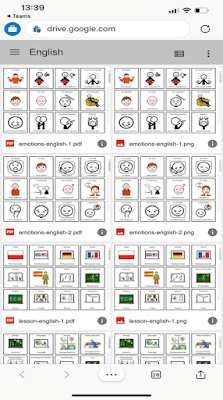
Visual Aids


https://drive.google.com/drive/folders/1Gx-zRkCKRnf6v1ikDDkwoHoGTzQ_yF3Z?fbclid=IwAR0-T45wx54UJinwpaPgd7iyBoNozOtJ6CqVvT89iHcjZPmWgM5AyNrA6fE


https://widgit.com have some resources for Ukrainian children. Images and words. And they’re free.


www.communication4all.co.uk    - Brilliant resources to support inclusion. 


Sports resources

youthsporttrust.org


Resources to support teachers and staff welcome and support pupils from Ukraine

Padlet packed full of resources  https://padlet.com/head260/1ef8sxok1fd0ypxo

https://globaldimension.org.uk 


 A huge thank you for signposting resources, links, documents and general advice to : 

@SusanWicht

@PhoenixEdSarah

@clairelbills   

@jessicacestaro

@NSEAD1

@OakNational

@WheelerMads

@FionaDunlop5

@RubyTuesdayBks

@ReelResearch

@Kidsown 

@JLTSFamily

@SarahAitchMCCT

@MatthewClark_HT

@RosMadeMe

@EShelbourn

@sarahmurrayv

@teachin_machine

@vawells1

@YouthSportTrust

@AlbaRuthe

@twinkl_eal

@ElaineGelder

@grahamandre 


Thursday, 1 April 2021

If music be the food of love, play on...


You can tell that half the country has started the Easter break. A twitter storm, a discussion around music and people’s differing opinions have collided into a landscape of reflection, argument and an agreement that you can talk about music for-pretty-much-ever. 

The model music curriculum quietly arrived at a time which surprised some and definitely didn’t for others. It’s important to remember that It’s not a compulsory document, it’s guidance, and what a refreshing thing to read after being hammered with so many reading, writing and maths updates, CPD, lectures and webinars. All worthwhile, but can become a sea of conflicting and sometimes confusing advice. The model music curriculum, in contrast, has the potential to be a springboard for some really great work and for music development in schools that had previously allowed music to be the first to get the chop.

Our school is small, rural, coastal, deprived and remote (We win a prize? Right?) and access to ‘The Arts’ is not on our doorstep. Therefore, we’ve always had to think creatively in terms of budget, time and what really counts when it comes to our curriculum offer.  Music has always been massively important, regardless of the challenges we have faced as a school and we believe it has had a big hand in moving our school out of special measures. Not purely because of the music curriculum offer, but because of the huge impact it has had across all other subjects, plus the influence on mental health and well-being, on bringing our community together, on communication and early socialization. It was a signal to our children, colleagues and community of the high ambitions we had for everyone.

As a school leader, I knew our music curriculum was restricted to singing services and an occasional visit by drummers. Having contacted the local Music Hub, we began inviting a Brass teacher in for weekly whole class lessons with our more challenging KS2 class. The discipline of music, team work, consistency and listening skills, alongside decent direction, really did create something wonderful for that specific cohort. After some persuasive conversations, that teacher became our music lead and a full time member of teaching staff (and he’s still here 4 years on!).

Having such a small team, staff wear multiple hats in terms of subject leadership, there is always a risk that the focus and majority of time and budget is spent in the core subject areas. There had to be really open and robust conversations around everyone’s subject knowledge within the wider curriculum and areas for development - and likewise conversations about areas in which they could support, and cascade training. While supporting staff to develop themselves and hopefully move on to bigger and better things, succession planning has become an integral part of the normal strategic development of the school and that means ensuring subjects like music have got to be considered. Developing support staff to work alongside teachers has ensured a sharing of knowledge and a mixing of different perspectives into teaching sequences. This offers everyone a broader context and avoids us working in silos.


We promote learning an instrument from Years 1 through to 6. Children learn the recorder, ukulele, a brass instrument and everyone sings. After their 2 years, if they want to continue, we either source a teacher or signpost families to local opportunities. We believe children learning an instrument promotes individual learning, independence and unpins everything they learn within the classroom. Children learn that you can’t pick something up and become a virtuoso. It takes time, practice and perseverance to achieve their goals. We have found that our children with additional learning needs have gravitated towards these opportunities and relished the challenges that music brings. Exposure to music at an early age provides building blocks like no other subject.

• At Key Stages 1 and 2, pupils should receive a minimum of one hour of teaching a week; this may take the form of short sessions spread across the week.’  Model Music Curriculum: Key Stages 1 and 2 

If you consider a normal week in school, there will be many times in which music takes place. This may be through nursery rhymes in EYFS, singing assemblies or collective worship, reciting times tables in chants, breaking down sentences in to rhythmic patterns, call and responses in phonics and other subjects, using programmes like Scratch, Chrome Music Lab, GarageBand, Times tables Rock stars in computing and maths, or in games at break and lunchtime. Our schools are awash with rich opportunities to use and apply music, whether we are consciously aware or not. Whether you are a music specialist, have a music background or are completely new to the subject or new to teaching, just being more aware of when you are using music within your lessons is better than doing nothing. You will probably find you are doing more than you think.

The Model Music Curriculum may not encompass everything that you need as a school. On its publication, we sat down and had a look at our own curriculum map and examined whether there were aspects that needed to be added or changed; it definitely promoted discussion around Bjork, Oasis and The Beatles tracks (and lack of Bob Dylan!). There may need to be some research around your local community and what can and can’t be accessed, but this curriculum can be moulded and manipulated to work for you - and what an exciting place to start!

Thank you to Nick Sermon (@nicsermon)  for his thoughts and expertise on this blog. 


Tuesday, 24 November 2020

What is the real cost to our pupils and how can we manage it?

During the first lockdown, schools up and down the country were providing remote learning in many different ways. We were sensitive to the fact that meeting the needs of all pupils was a very tough gig. SENDCos  that I have recently chatted to highlighted the difficulties in providing scaffolding and accessible work that could still make children feel included and to ensure they progressed and didn’t cause anxiety or concern while they worked at home. Now we find ourselves in very different circumstances and one that I believe could potentially be much more damaging to our most vulnerable learners.

I firmly believe that the first lockdown isn’t going to be the main cause for gaps in learning or issues around mental health, but this current climate will be. Pupils with anxiety, SEMH (Social, emotional, mental health), ASC,  attachment disorders and a plethora of other additional needs,  usually expertly managed by class teachers, support staff, SENDCos , families and other agencies working together to nurture and educate are now in situations in which this support network is not available in the same way, or at all. Due to isolating adults, burst bubbles, or decisions to move staff around to ensure there are adults to teach classes, the upheaval and effect on these pupils can be immense.  In the current climate, in which school leaders have been asked to ensure schools remain open seemingly at whatever the cost, it is absolutely vital, more than ever before that we are putting in structures and mechanisms to ensure that the long term effects are minimised for all our pupils, and a priority for those pupils with SEND. 

We know that consistency, routine and structures in the day are the key to low arousal, low anxiety and the safe haven that our pupils have become accustomed to in order to go about their day in relative normality. With this removed we could face the long term effects of serious SEMH issues, exacerbated by an unknown timescale in terms of returning to the ‘Old normal,’

So what ?

School leaders and particularly SENDCos need to think very strategically in the way in which they can support pupils with SEND right now. Despite the DFE’s very caring Any redeployments should not be at the expense of supporting pupils with SEND’. Rather than waiting for the outcomes and effect on pupils, there are some good practices that we could all be doing now, to help support our most vulnerable pupils. As usual, the strategies and ideas below can be used as a whole school approach and will, I hope, be beneficial to all.

Information sharing of new staff

Some decent supply agencies will send through a picture and small biography of the teacher coming to cover the class. This is usually used for safeguarding purposes, but could easily be used to share with pupils that need that reassurance and to familiarise themselves with the adult who will be leading the lessons.

Pupil Passports

Likewise, ensuring the practitioner knows as much about the class as possible, is also good practice. Previously, we had pupil passports for any children that had a particular need, trigger or care plan. These are also known as one page profiles and give a simple crib sheet of information. This helped in a few different ways. Firstly, it gave the teacher an overview of the class need, it allowed them to plan strategies they may need to incorporate in the lesson and it gave key information for contact people or emergency procedures for care. A file for each class is kept in the office and given to the cover teacher on arrival. The SENDCo or member of SLT would give time to talk though and look at the file before talking through the structures of the day and the contact points for the adult.

Some good examples and templates can be found here…

https://www.sendgateway.org.uk/resources.pupil-passports.html

https://www.driveryouthtrust.com/from-one-page-profiles-to-pupil-passports-the-route-to-successful-inclusion-in-the-classroom/

A word of warning – Pupil Passports can be highly sensitive or confidential in nature. Asking the pupil if they are happy to share the information or having a version that contains enough information to support for a short period of time but does not expose too much, seems to work just as well. Also, ensuring they are not left on desks or in classrooms is vital and ensuring at all points that the pupil is happy to share the information ensures a continuation of trust and respect between all involved. 

Social Stories

Social stories are really simple to make and hugely effective. They were originally designed to support communication and social cues for children with ASC, social difficulties and developmental delay. They are particularly used for changes in routines or big changes like school transition. They are a simple set of communications that explain what or why something has happened or changes coming up. They can be really simply illustrated using things like ‘The Noun Project’ (https://thenounproject.com)  Communication in Print (Widgit) , or there are some prepared social stories, found here:

https://www.abaresources.com/social-stories/

https://www.autism.org.uk/advice-and-guidance/topics/communication/communication-tools/social-stories-and-comic-strip-coversations

We use them to correct or manage some behaviours, and have created some transition booklets for identified children, they can be used throughout the day and sent to parents who can use them with their children too. We used them effectively for our new Reception starters in Sept, when they were unable to attend the school for taster sessions. They introduced the building, the staff and the different learning environments and allowed parents to share throughout the summer, in readiness for the first day. 


Emotional check ins

We will be spending the next week or so, putting together a list of other available adults in the school that the pupils are familiar with as a point of contact either within their bubble, or with the ability to contact remotely, to ensure that our pupils can still access an emotional check in at different points in the day, directed by their personalised plans or APDR.

Not ‘over resourcing’ when you are away from the class

It is really easy to throw every type of resource into the mix to support when in a panic and wanting to be as helpful as possible. Often, less is more. For example, if a child is confident in using a number line, multiplication square, Numicon, or dienes apparatus alongside their personalised resources in maths, then just stick with those. Supplying them with unfamiliar items, even with the best intentionscould raise anxiety for both the student and the person teaching the class. There is a danger that they could be used incorrectly, and when you are finally all back into normal lessons and timetabling, you may need to deal with misconceptions or children feeling like they have failed to meet the expectations of the lesson.

….and finally…

Use your local cluster groups, SENCo Forums, trusts and social networks to ask for support and advice. More than ever, this is the time to ask questions, seek advice and work together collaboratively. There is no shame in asking for help, this is new, for everyone.


Saturday, 3 October 2020

All Together Now


Parents evening is always insightful. It's a moment which can build bridges and offer both parties an idea of how children are when not in school. It can also be a nightmare; one in which difficult conversations can take place and issues not previously raised can take over the meeting, leaving people pretty deflated and unfulfilled. If, like me, you are (or were!) the last teacher at the end of the evening -with the caretaker jangling their keys and pacing the building as a subtle way of telling you you've talked too much - then having a structure to work from will definitely save your sanity (and everyone else's). 

For the past three years, we've been working on and developing our parents evening structures and processes, loosely based on  AfA's  'structured conversations' and I now feel that, in light of schools' difficulties in holding face-to-face meetings, this may support other schools with getting the most out of the meetings and hopefully keep communication lines open and ongoing at other points of the year in a transparent, enjoyable and supportive way. 


Why 'collaborative conversations' ? 

The first premise was to ensure that parents/carers and pupils (in attendance) felt part of the conversation in a positive way and that they could work together, with the teacher to set targets and help each other to raise the achievement of the child. It felt important that parents/carers were made aware of  the questions that would be asked, so no-one was on the back foot and the structure is already available and familiar to them. This means we send out the paperwork in advance and it also gives time for the teacher to consider the areas for development and positive areas for each child. We have a sliding scale of timings, and this is up to the discretion of the teacher and the needs of each pupil. We will offer 10 minutes for the majority of pupils, 15 minutes for pupils that may need to join the meeting towards the end or 30 minutes for children with additional needs or specific learning targets that need a more in-depth conversation, sometimes with the SENDCo, Family liaison Officer or support staff join the meeting. 

We feel that as children enter Upper Key Stage 2, they can attend the meeting, at the parents/carers wishes. Sometimes pupils will join the meeting at the end, so they are informed of the positives spoken about and the targets set and some children have a discussion with their families at home and then with their class teacher the following day. 

The content of the conversations

The first page 

Originally a traffic light, later changed after a discussion with staff who felt that the concept of 'Red' as 'Stop' failed to be supportive with children who needed possible support of extra interventions in order to make progress. A slight adjustment means that although it will flag up a concern, the discussion is more productive and thought through, and is easily understood by all parties. 

Mental health and wellbeing

This was added to the booklet this year, it fits in with our school focus on mental health and well-being and also reflects our societal change due to lockdown. I wanted to gather a picture around the child's current mental health and well-being and how they were during lockdown. This will also provide us with areas we could potentially support with if we were to go into a second lockdown or families self isolating and what strategies and resources we could provide. 


Parent/carer voice & Teacher voice

The most vital part and the questions that have had the biggest impact on building relationships with families that are long lasting and are the ones we ask the families at each meeting. They are simple, but offer the opportunity for the parents/carers to have a voice and to share their child's strengths and things they find a struggle. We also ask for their hopes and goals in both the long-term and short-term. These range from being able to learn to ride a bike, learn their time tables, deal better with their emotions, or learn to read, long term goals tend to be around aspirations for when they leave school or something the children have shown an interest in when they are older. This is always a really nice way to connect with the families and find out areas of interest for both the adults and the children. 

 In all cases, the teachers and support staff will already have got to know the pupils and have a solid idea of what the children's targets will be based around in reading, writing and maths. Due to time restraints and the focus of the school, these are the focus for our specific targets this year. We also give an opportunity to discuss any other aspects of school that may need targets or bespoke and specifically targeted support. 


Collaborative targets

Once the targets in reading, writing and maths have been discussed, the way in which these can be achieved collaboratively can then be set. This may be around daily practise, specifically signposted resources or apps, quizzing or time scaled small steps for success. The teachers will often discuss these with the support team and ideas are banked year after year, so there are a multitude of ideas available that we already know have an impact. This year we have added a box which the child can write down the ways they can help themselves. We are hoping children will take more ownership of their targets and think of ways they could work at home and in school. 


Final notes

Pretty self-explanatory really! But as a school, we really value the wider curriculum. I still fundamentally believe that children need to learn to read, write and add up before they can really enjoy wider curriculum subjects in a way that purely brings them joy (I know some of my colleagues will argue with me about this!)  So it is important that the teachers have the opportunity to also note and discuss any other areas of the curriculum they would like to share with families. It also means that subject leaders can share their expertise and encourage families to get involved in extra curricular pursuits!  


What next?

Autumn and Spring term follows this structure. We use the same paperwork and add to the Autumn term discussion. In Summer term, we will complete pages 7&8 with our statutory reporting pages - a list of each subject, and a personal pupil report from the teacher. This completed booklet will go home as the pupils final report. 

This year we will be conducting collaborative conversations by phone and this booklet will be sent home for families to have. They will be used to base our Pupil Progress Meetings and form our support timetable, ongoing conversations and actions for identified pupils. 

What have we found out so far....

The first year we introduced a version of these, the timings were a little hit-and-miss, but parents/carers really appreciated the opportunity to talk about their children. We had a couple of parents asking to 'just be told' about their children and didn't want to discuss them further, which meant the paperwork was left blank.  

We found that we could use the paperwork throughout the year, if we needed additional conversations and we also used the paperwork when we had interventions to support wellbeing and low confidence. The support staff could highlight to the child their parents opinions on their strengths and qualities, which was really great. 

As a SENDCo it has been really helpful when looking for supporting statements, hopes and aspirations for children from their parents/carers. It has also helped form Assess, Plan, Do, Reviews and set interventions and small working groups. 

and finally.....

I think whatever role you end up in, at the heart, you're always a teacher. So you can take great joy in the fact that I mocked up what I wanted for our collaborative conversations with tape and paper and scribble. I wanted to play around with a mock up and share it with my staff before committing to actual print and not being the most tech savvy, this seemed the most sensible way to get feedback! :D


If you would like a editable copy of this booklet, please drop me a DM on twitter @moderncassie and will email a copy over. Let me know if it helps, if you have ideas to improve the format or feedback! 


Saturday, 5 September 2020

Global Pandemic to Global Support - Restorative Approach

This week has been interesting. Alongside the normal anxieties of a new academic year, there has been the added unknown impact of lockdown. We can make bold statements, like, 'of course they don't need to catch up!' or 'Oh my god, they are 6 months behind!', or the most concerning, 'They are the lost generation.' 

Having had children back in school this week, it feels eerily normal. The honeymoon period is definitely upon us, much to everyone's relief: parents are skipping out of school, children are tired but happy, and the staff are firing on all cylinders. 

I would be lying if I didn't say there's a tense undercurrent to all this. The new routes around school, hand hygiene, the lack of mixing across key stages and staff is still the stark reality of the 'new normal'. Those adults and children who attended school during lockdown - you know, when we were closed (eye roll) - have modeled the routines to those still getting used to it.. 

During the lockdown period, all those in education have been beavering away, thinking about how to support those coming back and how they would tackle this faceless beast. I really enjoyed Rob Carpenter's 'Recovery Curriculum' talk and it really allowed me to reflect on the approach I thought was best for our school. Despite 'recovery' being the buzzword for most schools, I just didn't feel that it was right for us. We had already recovered from 'Special Measures' and being in a school in a particularly deprived locality, the negative connotations with the word itself, didn't feel appropriate. 

The team, as usual, have decided to use common sense and simplicity to support the school community. We had a mental health action plan in place before lockdown and we had made some good headway in supporting families in signposting and emotional awareness. Using the good practices in place, alongside the tiered approach (graduated approach) which I use in my SENCo role, was used to create our restorative tiered approach. 


Why restorative?

meaning: having the ability to restore health, strength, or well-being.

The school was in a good place, we had systems, approaches and consistency and we were working towards deepening this work. Schools know how to be nurturing and inclusive, those that have good practice haven't suddenly forgotten how to support pupils, despite the white noise of media, news and professionals working outside of schools telling us otherwise!  It's important that we do not lose confidence in our own abilities or think that everything that went before to support mental health and well being was a bit, well, crap.  


The approach

 My first plan was to use our school values and create a crib sheet that would give ideas to support pupils and families. It really didn't work. It meant the types of support were scatter-gunned around and it was a hard to navigate. My teachers very quickly told me (before it was all shiny and finished!) so we went back to the drawing board. We considered the Assess, Plan, Do, Review style, but we knew it would need to be a whole school approach and that the support mechanisms could become redundant rapidly. 

Finally, the tiered approach worked for what we needed.

Each tier has strategies, actions and interventions that run alongside our already existing curriculum.This will also provide guidance for adults to resources, strategies or identified people that can support children at an individual level. During our INSET day, we discussed the need for adults to continue to be vigilant, compassionate and understanding while maintaining our high expectations, both behaviorally and educationally. 

Our tiers are unpinned by our behaviour curriculum. 

Tier 1

The actions in tier 1 are our already established practices. Most are the automatic responses and strategies we use in the day to day running of the school. Some probably seem really small and insignificant actions, but they make our school somewhere that feels safe for our pupils. 


Tier 1

Universal

Whole School

Already in place

Behaviour expectations reiterated, practiced and returned to regularly by all staff and pupils

Adults to continue to be on the door every morning

Individual check-ins for those with APDR highlighted strategies

Any changes in circumstances for families (Job Loses/Family break ups/Bereavements) to be flagged up to teachers and support staff. Safeguarding updates to continue weekly. 

FLO to signpost to community support groups, government support initiatives or through front door system (Early help/SS)

Class environments to support a low arousal approach to support SEN pupils

Celebrations of children’s work on walls and working walls used for useful resources of basic concepts and recall opportunities until new content is covered.

Adults visibly present for children and parents whenever possible

SLT member on gate every mornings and evening

FLO available for parent support

QFT as first strategy in all circumstances

SENDCo to contact all families identified as SEN to discuss APDR – Explaining September support and timelines

Whole school approaches to support SEN/ALS to continue – ASC Champion to go through process and procedures in line with behaviour policy.

Online safety is prioritised in term 1 due to increased internet capacity in locality – ‘Project Evolve’ for all year groups

Staff are professional, capable and trusted to get on with their jobs.

Teachers will act within their own judgments and assess children accordingly

Staff to be vigilant to children with changes in behaviour – Flag up to DSL and Pastoral Team. Using My Concern to record all concerns.

Collective Worship to take place outside as whole school if possible (inside, if 1-metre distancing can take place)

Every two weeks, protected time for coaching to support staff well-being. 

Weekly TA meetings taken by SG on a Wednesday during Collective Worship.

Communication with parents via SeeSaw to continue this method since lock down. 

Time to Talk – weekly coffee drop-in for parents.

Language and speech-link for all new starters

Collective worship to continue and each week to reflect the school values – Friendship, community, compassion, trust, forgiveness, respect. To go through each Bible story and for prayer boxes to be available in each room and children to be given an opportunity to write and reflect in prayer space.

Physical activity increased. Daily mile, extra 10 mins in afternoon sessions with new playground markings to encourage physical play. 


Tier 2


This tier reflects the enhanced actions in light of COVID-19. These may be temporary changes or practices that we know will ensure the well-being, mental and physical health of the school community. 


Tier 2

Enhanced practice

Whole School

Reviewed at end of term 2

Speaking and listening opportunities to be explicit on timetable through English and PSHE – to give opportunities to widen children’s emotional vocabulary and support an open culture of sharing feelings and reflections in light of recent events

Discussions with all children around diversity and protests after society events. Which respected voices would children benefit from hearing from? (Educationalists, the church, respected sport figures, etc…)

Protected time to read books, building vocabulary and emotional literacy

Whole Class emotional check-ins

Adults to make reference to teams, classes, groups and sportsmanship to ensure clarity in expectations when working together

Opportunities to continue to work independently, don’t assume everyone wants to be sociable at times!

Book corners to be made available for children that want space.

Only display boards used in order to keep rooms sensory friendly

Social distancing reminders (unless guidance changes)

Family lunches to continue with members of team eating with pupils (rota to be confirmed) More frequent than has been done previously.

PSHE focus on difference – everyone may have dealt with lockdown in different ways, and that’s ok.

PSHE focus on family – family structures may have changed during lockdown – share stories around families and differences

Gap analysis and teacher plans to reflect this and ‘slow’ learning of missed concepts and ensure catch up. Normal strategies for differentiation.

Protected time for story reading (as before) Books used to discuss PSHE areas and vocabulary, widen and increase to allow articulation and reflection on the lockdown experiences.

Corona Virus ‘Time Capsule’ to be used for ‘closure’ and reflection. Copies to go home, copies to create memory book for school log.

Greater emphasis and responsibility given to worship leaders and choices on themes given to worship leaders.

Sing outside as a whole school when weather allows. Songs familiar and known to the children. 


Tier 3 


This tier is specialist intervention. We will already know which children may need this level of support, some may need this further down the line, once the routines and regularity of school is back and children then feel safe to reflect and open up about experiences that may require support.


 Tier 3 

Targeted support

Specialist intervention

Bereavement policy plans and interventions around loss (using well-being champion to facilitate)

Children who have not engaged in any learning – to be identified and check that possible other forms of work have been completed.

Moving on from lockdown – Do these pupils need specific lessons on basic concepts (Year group appropriate)

Referrals to outside agencies – e.g Front door Early Help and social services

Ask for specialist advice from case workers/Inclusion&Attendance/PEO/

Lift referrals to STLS

Referrals to CAHMS/NEFLT/OT/OH/School nursing

Identified interventions and giving to appropriate person.

Bespoke curriculums for children that have been identified

Nurture provision referrals

Record of concern – Inclusion Excel spreadsheet. Flagged up for inclusion meetings.

Available resources in school for assessment or screening to produce bespoke support – in line with SEN Policy

·         Lucid Rapid

·         Lucid Lass (Rapid and Lass are computer based and highlight areas associated with             Dyslexia)

·         Language Link

·         Speech Link

·         Junior Language Link (Speech, Language and Junior Link assess children’s language           and speech skills)

·         Language for Learning

·         The British Picture Vocabulary Scale

·         Star Reading Assessments

·          Maths Snap assessment

·         White Rose Maths Assessments


This is obviously something that we will add to, and there will definitely be aspects that we will not need to use. The purpose of creating a tiered approach is to give staff the ability to look at established strategies, but also the confidence to know that they can move between the tiers when needed. Empowerment of staff is vital during such unknown times. Trusting staff as professionals, to act in the best interests of the pupils in their care and know that there is a safety net of support if they feel pupils require more specialist intervention. 

Please feel free to use, adopt or share.